Field Expedition Summary
Separated from Gondwana mainland during the early Miocene period (over 18 million years ago), Socotra’s prolonged geographical isolation has birthed an extraordinary ecosystem where 37% of its 825 plant species exist nowhere else on planet Earth. Often described as the most alien-looking landscape on Earth, this island chain in the Indian Ocean presents rugged limestone plateaus, subterranean caverns, and coastal dune formations.
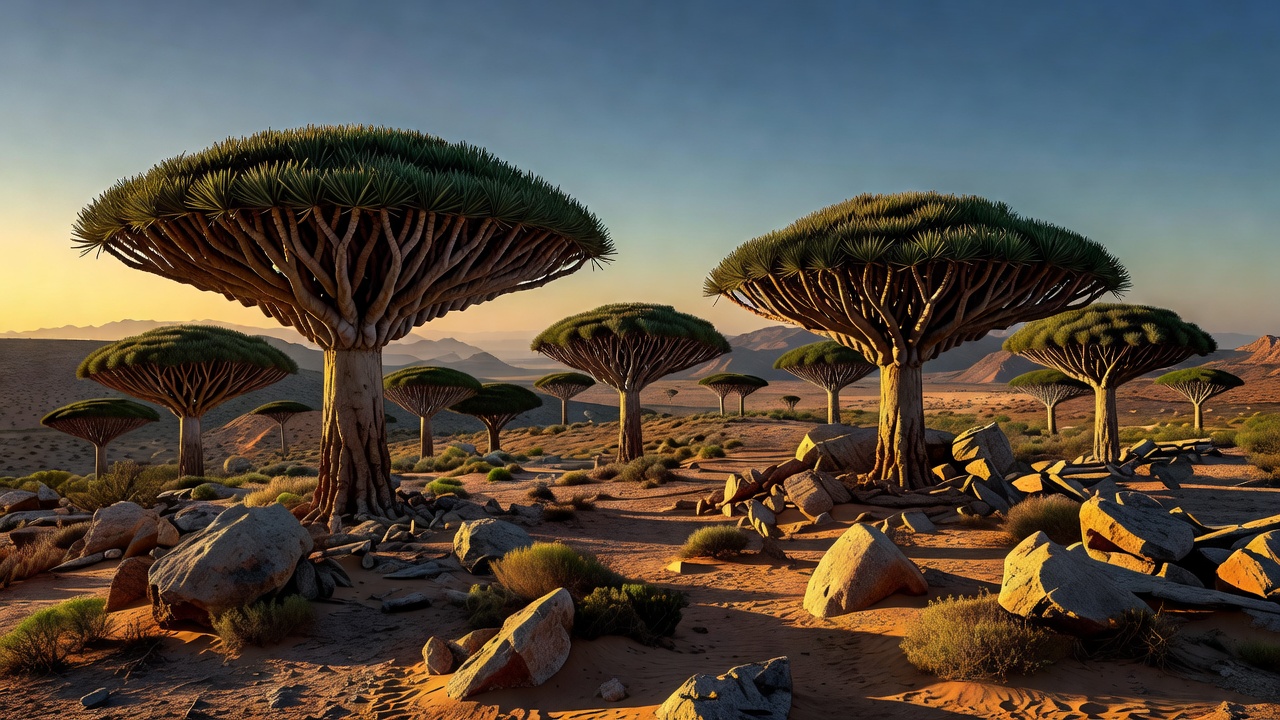
"Standing beneath the thick parasol branches of Dracaena cinnabari at sunset feels less like traveling through Arabia and more like landing on an unmapped solar satellite."
Botanical Wonders: The Dragon's Blood Tree
The iconic symbol of Socotra is the Dracaena cinnabari (Dragon’s Blood Tree), recognizable by its bizarre umbrella-shaped canopy designed to capture moisture from fog mists atop the Diksam Plateau. When the bark is carved, it exudes a thick crimson resin that ancient Roman and medieval medicinal alchemists prized as a magical remedy and pigment for violin varnishing.
Navigating Access & Terrain
Accessing Socotra requires chartered flights operating via Cairo or Abu Dhabi due to mainland Yemeni geopolitical constraints. Once landed at Hadibo, ground navigation relies heavily on 4x4 vehicles and Bedouin trackers. Trekking through the Hagghier Mountains demands sturdy boots, reliable satellite communications, and water filtration systems for stream crossings.
Key Expedition Highlights
- Diksam Plateau: The primary forest concentration of ancient Dragon's Blood trees spanning dry limestone cliffs.
- Detwah Lagoon: A protected marine sanctuary boasting white silica dunes, stingrays, and clear waters.
- Hoq Cave: A colossal 3-kilometer deep cavern filled with ancient inscriptions by 1st-century sailors.